Respiratory
Asthma, bronchiolitis, croup and respiratory distress.
Use as a study guide only. These notes are part of a free open-access medical education (FOAMed) project and may contain errors or outdated information. Always verify against current guidelines (e.g. eTG, RACGP, local health district policies) and reputable sources before applying anything to patient care. See the full disclaimer.

Clinical pearls & learnings
Tips and tricks collected over the years — a living list that grows with every rotation. Use as a study guide only and check current guidelines before acting on anything.
Stridor, tachypnoea & respiratory distress
Never RSI a stridoring child
Never perform rapid sequence induction in a stridoring child — paralysing them can precipitate complete airway obstruction. Keep them calm, avoid distressing examinations, and get senior anaesthetic/ENT help early to secure the airway awake or with inhalational induction.
Differential for tachypnoea
| Category | Causes |
|---|---|
| Respiratory | Asthma, LRTI/pneumonia, PE (consider the OCP in a teenager) |
| Neonatal lung disease | PPHN, transient tachypnoea of the newborn (TTN), RDS |
| Metabolic | DKA (Kussmaul breathing) |
| Cardiovascular | Shunting, congenital heart disease, arrhythmias |
Sweating with feeds in an infant is a red flag for cardiac disease — heart failure or an arrhythmia causing respiratory distress during the exertion of feeding.
Paediatric respiratory management — quick-reference poster
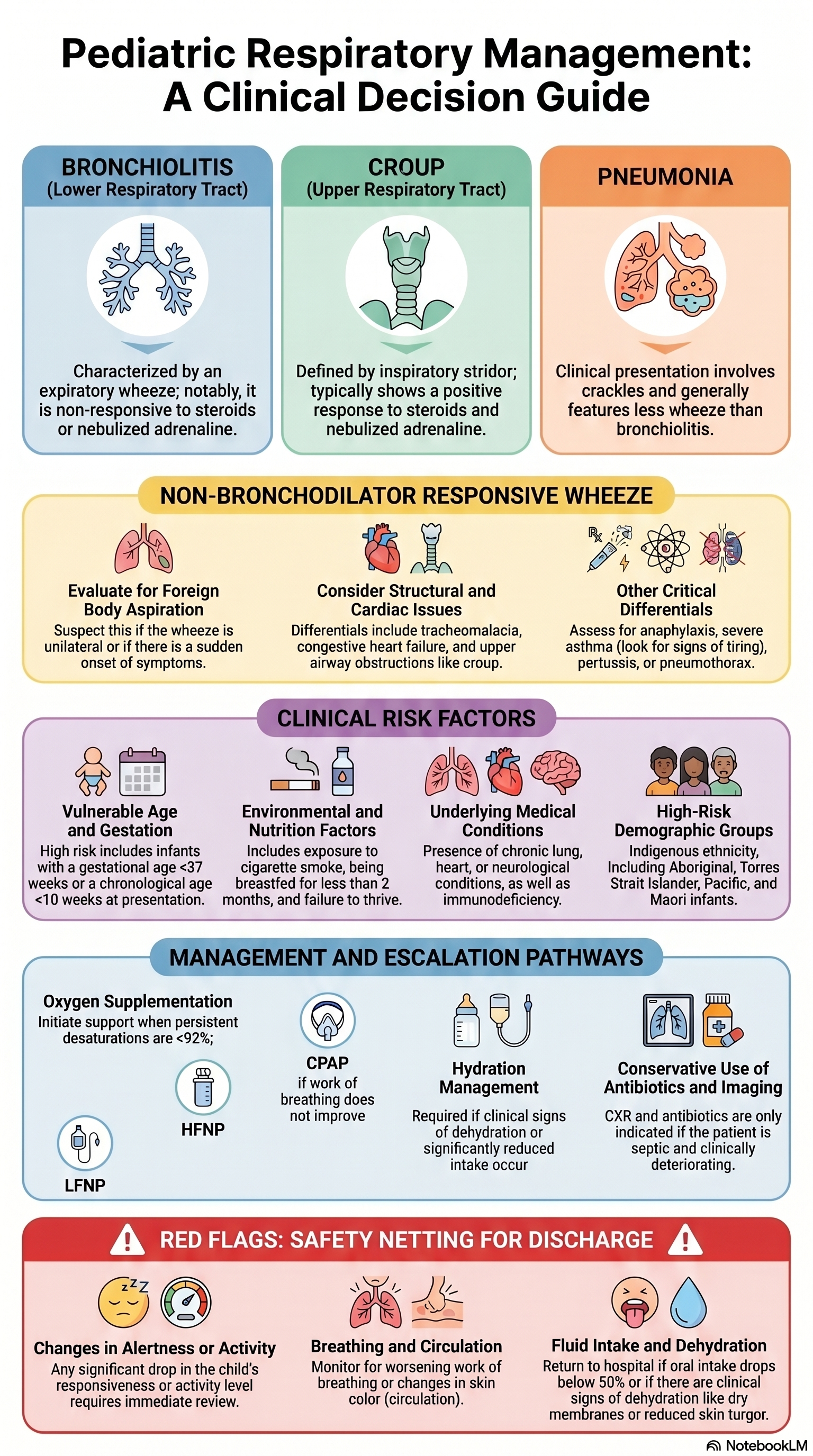
Bronchiolitis
Bronchiolitis
- Supportive care is the treatment — oxygen, feeding support, and escalation to high-flow nasal prongs or CPAP as needed.
- Apnoea is a real risk, particularly in young and ex-premature infants — these babies need close monitoring rather than a ward corner.
- Reassess whether the picture really is bronchiolitis: consider hypoxia, hypovolaemia, a duct-dependent lesion or sepsis if the child is worse than expected.
Asthma pharmacology
Salbutamol toxicity with high-dose/frequent use
Beware tachyphylaxis, a rising lactate, and hypokalaemia with excessive salbutamol dosing.
- Hypokalaemia: use potassium-containing maintenance fluids (e.g. 10mmol KCl in 5% glucose) rather than withholding potassium.
- Give IV magnesium alongside.