Acute Care
Notes, summaries and exam pearls for this rotation. Every note opens as a PDF in a new tab.
Use as a study guide only. These notes are part of a free open-access medical education (FOAMed) project and may contain errors or outdated information. Always verify against current guidelines (e.g. eTG, RACGP, local health district policies) and reputable sources before applying anything to patient care. See the full disclaimer.
 Acute Care & EmergencyPDF · opens in a new tab
 ECG BasicsPDF · opens in a new tab
 ICU & AnaestheticsPDF · opens in a new tab
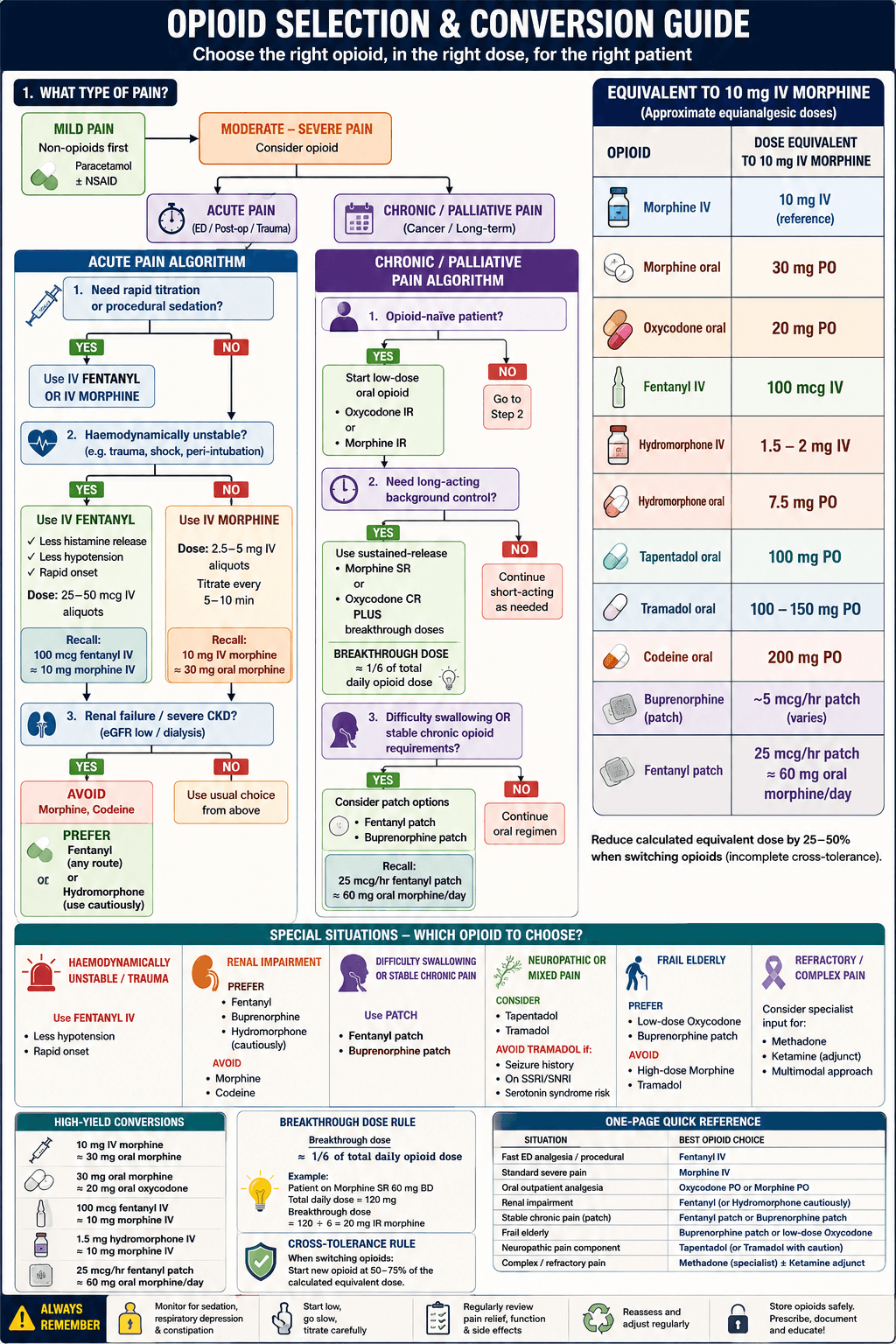 Opioid Selection & Conversion GuidePDF · opens in a new tab
 Imaging ChecklistPDF · opens in a new tab
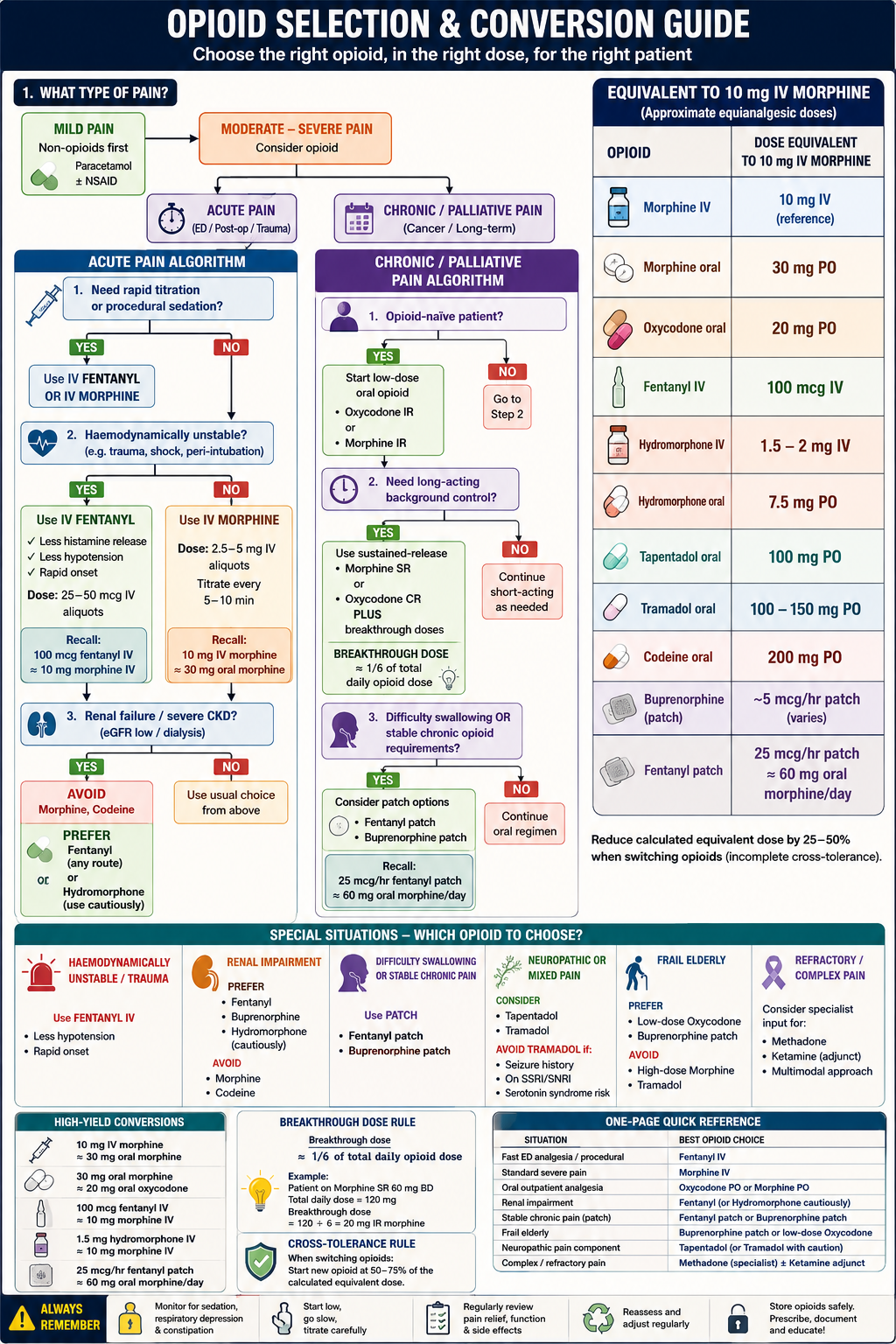
Clinical pearls & learnings
Tips and tricks collected over the years — a living list that grows with every rotation. Use as a study guide only and check current guidelines before acting on anything.
Grand round pearls
Thiamine and lactate clearance
Thiamine is the cofactor for pyruvate dehydrogenase. Without it, pyruvate cannot enter the Krebs cycle and is shunted to lactate — producing a persistent lactic acidosis (type B) that will not respond to fluids or oxygen delivery. In a patient with an unexplained or non-clearing lactate, especially with alcohol dependence, malnutrition, hyperemesis or post-bariatric surgery, give IV thiamine.
Give thiamine before any glucose load — a glucose infusion in a thiamine-deplete patient can precipitate Wernicke's encephalopathy.
A high CSF opening pressure
- Chronic infective meningitides are the classic causes: cryptococcal meningitis (often strikingly high pressure, requiring repeated therapeutic drainage), tuberculous meningitis, and toxoplasmosis — think HIV and other immunocompromise.
- Also consider idiopathic intracranial hypertension, venous sinus thrombosis, and space-occupying lesions.
- In cryptococcal disease, managing the pressure is as important as the antifungal — raised pressure drives the visual loss and mortality.
Refractory terminal agitation
Levomepromazine is a broad-acting phenothiazine antipsychotic used in end-of-life care for agitation and delirium that has not settled with midazolam. It is also a useful broad-spectrum antiemetic. Before escalating, always re-screen for reversible drivers — urinary retention, faecal impaction, pain, opioid toxicity and hypoxia — and involve the palliative care team.
Hypothermic cardiac arrest
- Passive rewarming: remove wet/cold clothing, insulate.
- Active rewarming: forced-air warming (e.g. Bair Hugger), warmed IV fluids, warm bladder/peritoneal irrigation, and ECMO for severe cases — ECMO also provides circulatory support during the rewarming process itself.
Cardioactive drugs (including defibrillation and standard resuscitation medications) are largely ineffective below a core temperature of around 30°C — prioritise rewarming, and remember "not dead until warm and dead": resuscitation efforts are generally continued longer in hypothermic arrest than in a normothermic arrest.
Vomiting — a broad differential
Don't stop at the gut
| System | Causes |
|---|---|
| Gastrointestinal | Gastroenteritis, bowel obstruction |
| Metabolic | DKA |
| Neurological | Raised ICP / head trauma |
| Obstetric | Pregnancy (including ectopic) |
| Cardiac | ACS — nausea/vomiting can be the dominant symptom, especially in inferior MI, women, and diabetic patients with autonomic neuropathy |
Toxicology & environmental exposures
Anticholinergic toxidrome — Datura (jimsonweed)
Datura species contain anticholinergic alkaloids (atropine, scopolamine, hyoscyamine).
The classic anticholinergic toxidrome
| Sign | Mnemonic |
|---|---|
| Hyperthermia | “Hot as a hare” |
| Flushed skin | “Red as a beet” |
| Dry mucous membranes and skin | “Dry as a bone” |
| Mydriasis | “Blind as a bat” |
| Agitation / delirium | “Mad as a hatter” |
Management is largely supportive — cooling, benzodiazepines for agitation, and physostigmine in severe cases under toxicology guidance.
Chlorine gas exposure
Nebulised bronchodilators are a mainstay to prevent/treat the resulting bronchospasm; supportive care and observation for delayed pulmonary oedema, which can develop hours after exposure.
Scombroid poisoning
Not a true allergy — improperly stored fish (tuna, sardines, mahi-mahi) allows bacterial overgrowth that converts histidine in the flesh into histamine, which is heat-stable (cooking doesn't destroy it). Presents like an acute allergic reaction shortly after eating. Management is the same as for an allergic reaction regardless of the different mechanism: antihistamines, IV fluids, bronchodilators as needed.
Alpha-gal syndrome
A tick bite can induce IgE sensitisation to galactose-alpha-1,3-galactose ("alpha-gal"), a sugar found in mammalian meat — leads to a delayed allergic/anaphylactic reaction, typically 3–8 hours after eating red meat (the delay reflects the time needed to digest and absorb the glycolipid). Manage as anaphylaxis, including IM adrenaline where indicated.
Skin prick testing after a reaction — timing matters
Testing too soon after an acute allergic/anaphylactic reaction can give a false NEGATIVE result — a temporary post-reaction refractory period can blunt the skin test response. Defer testing for at least 2 weeks (some allergy services prefer 4–6) to avoid falsely reassuring a patient who does have a true allergy.
Cannabis hyperemesis syndrome
Cyclical vomiting in a long-term, usually heavy cannabis user, classically relieved by hot showers/baths. Droperidol (e.g. 0.625mg) is a useful antiemetic option in the acute setting; topical capsaicin cream is another described adjunct. The only definitive treatment is cannabis cessation.